
Can painting your home be eco-friendly?
Absolutely. When most people think about going green at home, they think of switching off lights, reducing water consumption, or choosing energy-efficient appliances. But painting — one of the most common home improvement activities — has a significant environmental footprint that’s easy to overlook. From the chemicals in the paint itself to the way leftover paint is disposed of, every stage of a paint job has an environmental impact.
The good news is that making genuinely eco-friendly choices when painting your home has never been easier or more affordable. Here’s your complete guide to a greener paint job.
1. Choose the Right Paint: Avoid High-VOC Formulas

Source: MotionArray
What are VOCs and why do they matter?
Volatile Organic Compounds (VOCs) are chemicals commonly found in conventional paint formulas that evaporate into the air during and after application. They are responsible for the sharp, chemical smell that lingers after a paint job — and they carry real health risks.
Exposure to high-VOC paints has been shown to irritate the respiratory system, eyes, and nervous system. In poorly ventilated spaces, like Singapore’s typically sealed, air-conditioned homes, these compounds can concentrate to levels that cause headaches, nausea, and dizziness. Long-term exposure carries more serious health implications.
VOCs also leave behind non-biodegradable chemical waste that harms air quality and the broader environment.
What to choose instead
Eco-friendly paints contain little to no VOC content, and they perform just as well as conventional alternatives. Nippon Paint’s Odour-less All-in-1 is an excellent example — it contains near-zero VOC content, is certified under the Singapore Green Building Products (SGBP) Certification Scheme administered by the Singapore Green Building Council (SGBC), and is available in over 1,000 colours. It’s genuinely odourless, meaning you can move back into a freshly painted room far sooner than with a conventional paint.
The SGBP certification is recognised under Singapore’s BCA Green Mark scheme — a meaningful, independently verified signal of a product’s environmental credentials.
Frequently asked: What is a low-VOC or zero-VOC paint? Low-VOC paints contain significantly reduced levels of volatile organic compounds compared to conventional paints, producing fewer harmful emissions during and after application. Zero-VOC or near-zero-VOC paints go further, making them safe for use in occupied spaces and suitable for people with chemical sensitivities, young children, or asthma.
2. Calculate How Much Paint You Need Before Buying
Source: MotionArray
One of the most common causes of paint waste — and unnecessary expense — is buying too much or too little. Getting your quantities right from the start is one of the simplest eco-friendly habits you can adopt.
Every paint tin specifies the theoretical coverage rate in m² per litre. To calculate how much paint you need:
- Measure the height and width of each wall to be painted
- Multiply to get the total area, then subtract the area of any doors and windows
- Multiply the paintable area by the number of coats planned
- Divide the result by the coverage rate on your chosen paint tin
Or skip the maths entirely — the Nippon Paint Calculator does this for you in seconds. Enter your room dimensions and it calculates exactly how many litres you’ll need.
Buying only what you need means less leftover paint to store or dispose of — which is better for your wallet and the environment.
Frequently asked: How do I calculate how much paint I need for a room? Measure the height and width of each wall, subtract the area of doors and windows, and multiply the total paintable area by the number of coats needed. Divide by the coverage rate on the paint tin (given in m²/litre) for the total litres required. Nippon Paint’s online calculator automates this calculation.
3. Choose the Right Paint for Each Area
Source: shutterstock
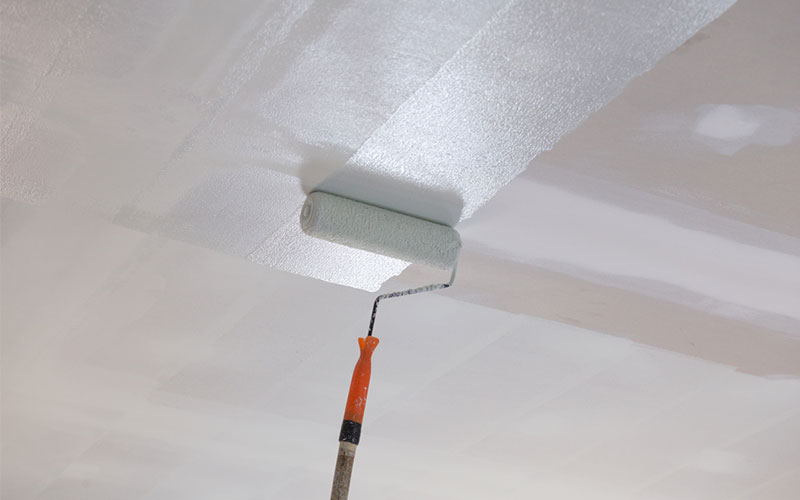
Not all walls are equal — and using the right paint for each specific area of your home is both an eco-friendly and a practical choice. The right paint lasts longer, meaning less frequent repainting and less paint consumed over time.
For damp and humid areas — kitchens, bathrooms, and ceilings Singapore’s tropical humidity makes mould a persistent challenge, particularly in wet areas like bathrooms and kitchens. Nippon Paint Odour-less Anti-Mould Ceiling White is an environmentally friendly green product formulated with anti-mould properties and broad-spectrum protection against most species of mould. It is non-toxic, contains no added lead or mercury, and is specifically formulated for ceilings in damp conditions — making it the right choice for kitchens, bathrooms, and the area around air-conditioning units.
For living spaces and bedrooms Nippon Paint’s Odour-less All-in-1 and Odour-less Ultra Fresh Air are both excellent choices — the latter actively neutralises indoor pollutants and odours, improving air quality beyond just the absence of VOCs.
For high-traffic areas EasyWash & Clean (Matt or Low Sheen) reduces the frequency of repainting in busy areas by making wall maintenance effortless — its Teflon surface protector technology allows dirt and stains to be wiped away cleanly, extending the life of the paint job.
Frequently asked: What paint should I use in a humid Singapore bathroom? Nippon Paint Odour-less Anti-Mould Ceiling White is specifically formulated for damp and humid conditions, offering broad-spectrum protection against mould species common in Singapore’s climate. It is non-toxic, low-VOC, and environmentally certified.
4. Dispose of Leftover Paint Responsibly
Source: shutterstock
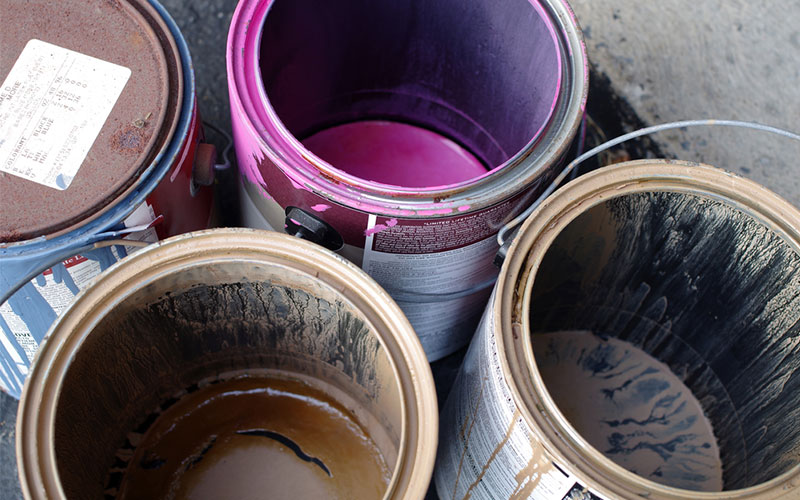
The final stage of any paint job is the one with the most potential for environmental harm if handled carelessly. Paint disposal is strictly regulated in Singapore — and for good reason.
What to do with leftover water-based paint:
- Small amounts (less than a quarter tin): Remove the lid and allow to dry completely in a well-ventilated area away from children and pets. Once fully solid, it can go in regular household trash.
- Larger quantities: Brush or roll the paint onto newspaper or cardboard, allow to dry fully, then dispose of in regular trash. Alternatively, donate usable paint to friends, neighbours, or community organisations.
- Never pour liquid paint down a drain, sink, or toilet — this introduces toxic contaminants into Singapore’s water system.
What to do with leftover oil-based paint: Oil-based paint is classified as hazardous waste in Singapore and must be disposed of through an NEA-licensed toxic industrial waste collector. Placing liquid oil-based paint in regular trash is illegal and can result in significant fines.
Storing leftover paint for future use: If you have usable paint remaining, store it properly rather than disposing of it. Clean the rim of the tin, seal tightly, and store upside down in a cool, shaded location away from heat sources. Properly sealed water-based paint can last up to 5 years.
For full guidance on responsible paint disposal in Singapore, see our Disposal and Storage of Paint guide.
Frequently asked: How do I dispose of paint responsibly in Singapore? Water-based paint must be fully dried or solidified before placing in regular trash — never dispose of liquid paint down a drain. Oil-based paint is classified as hazardous waste and must be collected by an NEA-licensed toxic waste collector. Leftover usable paint should be donated or properly sealed for future use.
Frequently Asked Questions About Eco-Friendly Home Painting
What makes a paint eco-friendly? An eco-friendly paint has low or near-zero VOC content, contains no added lead or mercury or other heavy metals, is water-based rather than solvent-based, and ideally carries an independent environmental certification. In Singapore, look for the Singapore Green Label or the Singapore Green Building Products (SGBP) certification — both are administered by recognised bodies and provide verified environmental assurance.
Is eco-friendly paint as good as regular paint? Yes. Modern low-VOC and zero-VOC paints perform comparably to conventional alternatives in terms of coverage, colour richness, durability, and washability. In many cases — such as Nippon Paint’s Odour-less range — they outperform conventional paints in liveability, since you can return to a freshly painted room far sooner without discomfort from fumes.
Is Nippon Paint environmentally certified? Yes. Nippon Paint holds the Singapore Green Building Products (SGBP) certification from the Singapore Green Building Council (SGBC), which differentiates its products as verified green choices for the coatings industry. Multiple Nippon Paint products also carry the Singapore Green Label. These certifications confirm the products meet independently assessed environmental standards.
How can I make my entire paint job more sustainable? Choose low-VOC or zero-VOC paints, calculate your quantities accurately to minimise waste, use the right paint for each specific area to extend longevity, store leftover paint properly for future touch-ups, and dispose of any remaining paint through the appropriate channels. Together, these steps significantly reduce the environmental footprint of any paint project.
Making your home’s paint job eco-friendly doesn’t require compromise — today’s green paint options are affordable, widely available, and perform beautifully. Small, thoughtful choices at each stage of the process add up to a genuinely meaningful difference.
Explore Nippon Paint’s full range of low-VOC and environmentally certified interior paints at nipponpaint.com.sg.
5 Ways To Maintain Your Scandinavian Home Design